
Among thoughts provoked by my recently reading James Madden’s Unidentified Flying Hyperobject: UFOs, Philosophy, and the End of the World (2023), aside from those concerning the hyperobject, were others regarding Madden’s about Jacques Vallée’s Control System Hypothesis and D. W. Pasulka’s contentions about the intentional steering of the UFO mythology. I have already probed some ideological implications of two variations of Vallée’s Control System Hypothesis; here, I address Madden’s presentation of Pasulka’s “troubling thesis” (105) from her American Cosmic (2019).
For Madden, Pasulka’s position is that “we are in the midst of a religious transformation, and this process is something that is being done to us…[using] the newly honed tools of media technology.” This “manipulation looks like it has been transacted, at least in part, by quite mundane powers.” This “religious transformation” is characterized by “a particular system of belief centering on ‘nuts-and-bolts’ UFO technology manned by extraterrestrial, rational animals.” For Madden, Pasulka is inspired to investigate this “religious transformation” first by Jung’s observation that with the modern “flying saucer” era “We have…a golden opportunity of seeing how a legend [for Pasulka, a religion] is born” (103).
Despite Madden’s seeing Pasulka and Jeffrey Kripal as “the avant garde for academic ufology in the humanities and social sciences” (9), the religious dimensions of the UFO and its pilots have a long, rich history of academic, scholarly investigation (interested readers are directed—for a start—to the essays collected in The Gods Have Landed: New Religions from Other Worlds (1995)). Be that as it may, what strikes Madden is Pasulka’s conjecture that the UFO mythology is being intentionally engineered. Madden quotes American Cosmic:
The creation of a belief system is now much easier to accomplish than it was two thousand years ago, when people didn’t possess smartphones and were not exposed to the ubiquitous screens of a culture that now teaches us how to see, what to see, and how to interpret what we see…I [Pasulka] was beginning to research the ways in which the virtual and digital media were being used for political purposes under the auspices of information operations. how the military employed media, social media, and all types of electronic media for purposes of national security. All these media have played major roles in the creation of a global belief in UFOs and extraterrestrials. It is in the world of media that the myth is created, sustained, and proliferates. (104)
Surely, the myth is, in a sense, “created…in the world of media:” there would be no “flying saucers” had not a journalist coined the term. The “visionary rumour” has been spread through print, electronic, and now digital media (newspapers, magazines, books, radio, television, cinema, and the internet). Indeed, the dissemination, formation, and reception of the myth in the media is a study of its own. At the same time, that the authorities (at least in the United States) have not been absolutely forthcoming and have actively engaged in spinning the topic is old news. Already in his first book, The Flying Saucers are Real (1950), Donald Keyhoe first expressed the view that the air force knew (or had, at least, concluded) that flying saucers were interplanetary spacecraft but was covering up this knowledge and dissuading public belief in it until a later date when through various public relations efforts the “ontological shock” of the revelation that “we are not alone” could be sufficiently cushioned and controlled. Keyhoe’s books planted the seeds for the ideas of “the flying saucer conspiracy” (the title of his 1955 book) and the push for “Disclosure” (the authorities’ admitting publicly what they know about our interstellar visitors), something Keyhoe actively worked toward in his lifetime.
Today, the locus classicus of such dissimulation is the Army Air Force’s first claiming a flying saucer had crashed near Roswell, New Mexico, only to quickly retract the story and explain what had been found on Mac Brazel’s ranch were the remnants of a weather balloon. No less pertinent if perhaps less famous is Allen Hynek’s being urged to explain sightings in Michigan as swamp gas. More gravely, stories of intentional deception by military and intelligence agents are well-known (Jerome Clark’s The UFO Book (1998) includes a two-dozen page entry “The Dark Side” with a thirty-seven entry bibliography). Among them, most notoriously, are the cases of Paul Bennewitz, who was driven to insanity and suicide by an Air Force disinformation campaign (as well-researched and documented by Greg Bishop in his Project Beta: The Story of Paul Bennewitz, National Security, and the Creation of a Modern UFO Myth (2005)) and that of William L. Moore, who was actively recruited both to provide intelligence on his fellow ufologists and to disseminate disinformation, an important actor in the whole MJ-12 affair. Jacques Vallée’s 1991 Revelations: Alien Contact and Human Deception delves into these and other, international stories, while the late Robbie Graham’s Silver Screen Saucers: Sorting Fact from Fantasy in Hollywood’s UFO Movies (2015) is arguably the deepest dive into government actors’ actively playing a role “in the creation of a global belief in UFOs and extraterrestrials” (Graham, curiously, absent from the pages of American Cosmic).
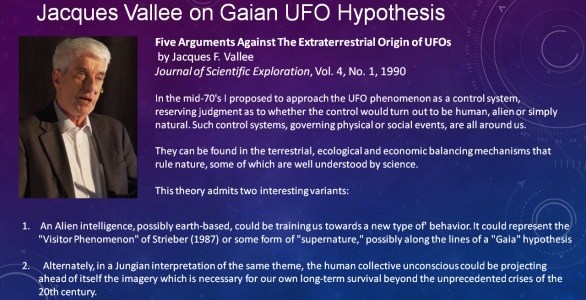
What needs be remarked is that already in his 1975 volume The Invisible College: What a Group of Scientists Has Discovered about UFO Influences on the Human Race Vallée was reflecting on the manipulation of the myth by both human and nonhuman agents, writing about both the UMMO affair (an elaborate hoax committed by unknown parties for unknown reasons) and developing his Control System Hypothesis (that some UFO sightings and encounter events are intentionally staged by the intelligence behind the “real” phenomenon to act as stimuli to modify social behaviour). These two manipulations are humorously represented in the X-Files episode “José Chung’s ‘From Outer Space'” (1996) where two air force pilots, disguised as Greys abducting a young couple, are interrupted and abducted themselves by a real alien from (perhaps) inner earth. Indeed, that the American (and other) governments have had a hand in manufacturing UFO events and manipulating the mythology is, itself, an important part of the X-Files‘ UFO mythology. (One might be moved to ask if Chris Carter’s series is, then, a moment of postmodern reflexivity, where the medium of manipulation makes an open secret of its manipulations). The matter is, indeed, complex…
Setting aside the possible deceptiveness of the Phenomenon itself, even the human steering of the mythology is far from simple. (I have ventured some reflections on the matter, here). First, there are a number of parties involved, national (e.g. the United States) and private (e.g., those responsible for the UMMO hoax). Even within a single nation state, there are a number of agencies, not all of which are necessarily acting in unison or even necessarily aware of each others efforts (e.g., the navy, the air force, the various intelligence agencies). Are all these pushing the same agenda? More generally, it seems not unlikely that various nation states will exploit the mythology each for their own ends. Indeed, one reason the United States Air Force was so concerned about flying saucers was it feared the Soviet Union could use a flurry of “uncoordinated targets” as cover for an air assault. Exactly how various international actors might in fact be exploiting the mythology is a question.
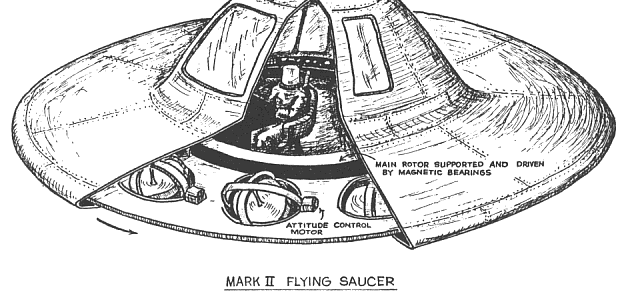
As the cases of Paul Bennewitz and others attest, at least in the United States, various actors have in fact worked to maintain and guide the mythology, but to what end or ends? In the case of Bennewitz, it was to cover up highly-secret transmissions Bennewitz had detected but couldn’t understand. Further, we do know that the idea of extraterrestrial spaceships buzzing the skies has served as a cover story to hide test flights of experimental aeroforms. Other uses are imaginable, but uncertain. Even if the myth is part of a larger, long term plan, perhaps the interested powers-that-be, even without an immediate use, seek to maintain the myth of interstellar visitors as a potential weapon in the psychological, propagandistic arsenal for some eventual, unforeseen use.
However, as the X-Files episode mentioned above shows, the mythology is, in a sense, out of control. The manipulation of the myth, as well, at least among a portion of the population, is even already out of the bag. One might ask, moreover, if it is imaginable that any one government can have an agent in a steering role in every movie and television studio. Anyone who has worked in the motion picture or television industry will attest just how aleatoric the process of movie production is, how hard it is to control and determine the final product, so many having a vested interest. Of course, an iron-fisted control is likely not even needed; all that’s necessary is to nudge the mythology as necessary, as long as the reigning idea is that of extraterrestrial visitation. As long as the idea is sufficiently profitable, it will be creatively exploited. (Arguably, a less paranoid and more interesting question is just why this idea holds so much fascination…).
At the same time, however ubiquitous the “visionary rumour,” exactly how powerful is it? What exactly is the value of steering “our collective unconscious toward [this] particular system of belief” by a “co-opted popular media” (105)? However true that such co-option is in fact at work, the production of the mythology is out of any one party’s hands, not to mention its reception by audiences who are hardly mindlessly passive receivers, rendering the predictable and, hence, controllable effects of the myth uncertain to a questionable degree.
What Pasulka fails to question are the conditions of possibility for the persuasiveness of the myth’s central idea in the first place, social conditions which imply a deeper function of the idea of technologically-advanced extraterrestrial civilizations. First, the “plurality of worlds” is an old idea; the belief in the possibility of “intelligent life” on other planets goes back to antiquity. Thus, ideas about aliens and their spaceships were already in the air when the United States Army Air Force cast around for possible explanations for the sightings of flying discs in the wake of Kenneth Arnold’s report of “flying saucers.” That this science-fiction theme already thrived quite vitally in the media of the day suggests there would have been little need for it to be cultured to whatever end, however much there is in fact evidence of such meddling. And, as I have argued here consistently, the myth of anthropomorphic extraterrestrials and their technologies is an all-too understandable projection of the self-understanding of the so-called “advanced societies,” especially within the context of their having “progressed” to the point of being able to annihilate themselves. On the one hand, these alien societies are images of a possible future the other side of the critical threats facing the modernized world; on the other, as SETI researchers themselves have proposed, extraterrestrial civilizations “more advanced” than our own might very well have solved the very problems that threaten ours, a belief shared by advocates of Disclosure eager to exploit those free energy technologies they believe world governments have retrieved, reverse engineered, and exploited to their own ends. This more profound view of the UFO mythology perceives it not so much as a new religion (though it has surely inspired New Religious Movements) but as a quite understandably spontaneous outgrowth of the ideology underwriting technoscientific society, a fantasy that imagines that, because such societies are natural (a universal feature of the evolution of life, from its appearance to its developing “intelligence”), technological “progress,” at least potentially, can solve the problems it itself gives rise to, an imaginary answer to a real problem. In this regard, it seems those aspiring social engineers that so concern Madden and Pasulka could very well have saved themselves the trouble.
















 Skunkworks