On a Certain Gnostic Tendency in UAP Studies

Friday 3 October 2025 the Society for UAP Studies presented a colloquium with Professor Jörg Matthias Determann on UAP in the Muslim world. Determann’s presentation (about which I may have more to say when the Society shares it on its YouTube channel) was wide-ranging and often fine-grained. As anyone moderately informed would have guessed, Determann remarked how the UFO phenomenon has been interpreted in relation to the Arabic figure of the Jinn. Just as Jacques Vallée and others attempt to draw parallels between modern UAP sighting and entity encounter reports and what Evans-Wentz famously called “the fairy faith,” so commentators in the Arab world understand the UAP phenomenon as a modern-day encounter with the Jinn. But what concerns me here is a not-unrelated exchange that occurred in the post-presentation conversation (and continued between myself and another participant via email). The thesis proposed (after some helpful added articulation by moderator Mike Cifone) was that, in light of the modern “Phenomenon,” religion is revealed to be (however obscurely) the story of human interaction with occult (i.e. mysterious) Non-Human Intelligences. In what follows, I sketch out (or essay, drawing on the root of the word) the profile and ground of this notion of religion…

This view is generally attributed to Jacques Vallée’s Passport to Magonia (1969), which modifies if not develops the Ancient Astronaut literature that explodes at the same time Vallée’s book appears (however much the Ancient Astronaut “theory” goes back to the first appearance of Flying Saucers). For writers such as (most famously) Erich von Däniken, the gods of the premodern world were all primitively-apprehended extraterrestrial visitors. Vallée’s thesis runs deeper, in a sense, seeing all these (gods, angels, daimons, fairies, extraterrestrials…) as different appearances of one species of crypto-entity, a position later modified to propose that these same entities may themselves be only illusory products of an even more cryptic agent, merely elements of a Control System. (One might wonder how much of Vallée’s thinking here springs from the French anticlericalism he was raised in…). However much Passport consistently fails to make its case (as a vigilant close-reading reveals), its main contention has proven to be and remains influential.

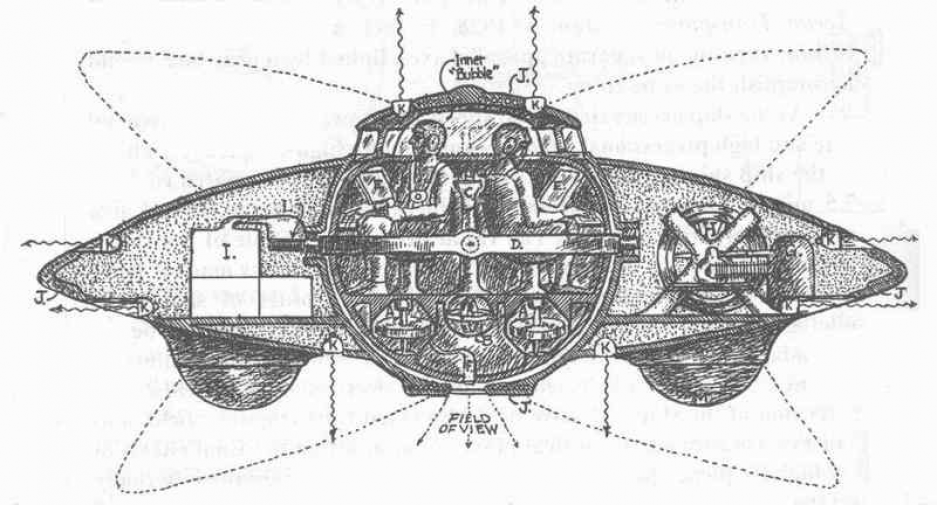
I find this view of religion to be unsupportably literalist and reductive, and I am earnestly puzzled to see scholars of religion not only entertaining it but seeming to take it seriously. The locus classicus of this kind of thinking is the Vision of Ezekiel, which, most famously since Erich von Däniken (and, most creatively, Josef F. Blumrich!), has been claimed by some to be a premodern UFO sighting report, Ezekiel describing a(n) UAP and his interactions with the intelligence behind it according to the concepts and language at his disposal. Von Däniken sums up nicely the literalist reading of the opening of the Book of Ezekiel. He writes in Chariots of the Gods concerning Ezekiel’s likening “the din made by the wings and wheels to a ‘great rushing.’ Surely this suggest that this is an eyewitness report?” (39). There is much, however, that complicates matters. First, however much the Book of Ezekiel is the first written prophecy in the Hebrew Bible, its authorship is uncertain; the book attributed to “Ezekiel” is quite possibly the work of several hands. Then, the vision itself, for all its rococo detail is famously obscure in its complexity, as the many and varied attempts to concretely depict it attest, which suggests the description is perhaps more or other than a flabbergasted one of an alien object. Even if we take the vision to be an “eyewitness report,” the witness himself is not very reliable. As Michael Lieb writes in his invaluable Children of Ezekiel

Scholars marvel at Ezekiel’s experience of bodily paralysis and periods of trances (Ezek. 3:15, 4:4-6); his accounts of levitation (Ezek. 3:12-14, 8:3, 11:1); his cutting, weighing, dividing, burning, binding, and scattering his hair (Ezek. 5:1-4); his sudden clapping of the hands and stamping of the feet (Ezek. 6:11); and his belief in his power to destroy with speech (Ezek. 11:13). (14)

Jacques Vallée would likely point to Ezekiel’s paralysis, trances, and levitation as consistent with the kinds of paranormal after-effects often associated with close encounters. But Ezekiel’s other behaviours (above) are part of a more concerning pattern (if we insist on taking the book at face value):

He is told to shut himself within his house. He is bound with cords, and his tongue cleaves to the roof of his mouth so that he is dumb (Ezek. 3:24-26). He is given to prepare his food with dung (Ezek. 4:15) and to accuse his enemies of worshiping dung balls (the term dung ball is found more often in Ezekiel’s prophecy than anywhere else in the Hebrew Bible). (14-15)

Unsurprisingly, “[s]uch circumstances have prompted some scholars to see in Ezekiel evidence of an especially pronounced pathology.” Today, such an “eyewitness” would not be believed, even by believers in the Phenomenon.

However, such troubles are somewhat clarified when we understand how illegitimate it is to spontaneously take Ezekiel’s vision to be an “eyewitness” report by understanding that an “eyewitness report” is a modern genre of discourse and that of the book of Ezekiel another. As I have been at great pains here at the Skunkworks, it is an error to project an historically, culturally, and socially local communicative convention (here, the “eyewitness report”) onto temporally and culturally distant texts and artefacts. Simply, one need first situate the text in the context of the discursive practices of its day; even if it should, as something radically new, break with these conventions, that departure can only come into view in light of what the text leaves behind. Logically, Ezekiel’s vision is either exoteric (visible to Ezekiel and anyone else within visual range of the phenomenon), esoteric (visible only to Ezekiel, consistent with the vision’s being a variety of religious experience or an hallucination), or, perhaps, a powerfully original work of religious poetry with prophetic import and intent. That is, I propose, the “truth” of the Book of Ezekiel is not in its “facts” but in the consequences of its revelations for the spiritual life of its intended readership, which is to read the book rhetorically (which is unavoidable, even for the “literal”—whatever that might finally mean—reading). It is my contention that precisely such philologico-rhetorical reflection is demanded of all culturally and temporally distant “accounts of encounters with Non-Human Intelligences” and that such accounts cannot be admitted as warranted evidence until that due diligence has been undertaken. Why otherwise learned scholars tend to such literalism reflexively is another, however interesting, matter….

The revision of religion I term gnostic (or, perhaps, neognostic) is founded on the testimony of Experiencers coeval or historical. If we take our concept of gnosis from Hans Jonas’ The Gnostic Religion: the Message of the Alien God and the Beginnings of Christianity (1958), gnosis is an immediate acquaintance with the divine (unlike that knowledge bestowed by faith or theological speculation). Not only is “[t]he ultimate ‘object’ of gnosis…God,” writes Jonas (35), but “its event in the soul transforms the knower himself [sic] by making him a partaker in the divine existence.” Gnosis, then, is a radically-transformative experience of the divine. Surely, the Experiencer (if we take their words prima facie) has experienced a Non-Human Intelligence and been changed by the encounter. In this sense, the tendency I explore here rests on a variety of gnosis. Insofar as this neognosticism rests on testimony distant in time and culture, that foundation is questionable; insofar as it appeals to contemporary, “Western” reports, its founding revelations are a variety of religious experience whose veracity is (to the say the least) contested, not merely on dismissively sceptical grounds. In either case, those who entertain this neognosticism, the conjecture that the history of religion is the history of encounters with Non-Human Intelligences, cannot claim to know this version of religion to be true, they can appeal only to the gnosis of those they designate as Experiencers.

If, however, we “bracket” the question of the (questionable) truth of the speculative revelation at the heart of this neognosticism, certain, curious implications come into view. In nuce, like the appearance of Flying Saucers within the horizon of the Cold War, neognosticism “stands in compensatory antithesis” (as Jung said of the Flying Saucers) not to the threat of atomic warfare (as after the Cold War) but the existential threat of global warming and ecological degradation. This neognosticism then appears reactionary, fleeing the chaos of the present and a threatening future into a premodern, paranoid (however “enchanted) “past;” positing a certainty (gnosis) in the face of anxious uncertainty; and taking flight from time (history) into an a-historicity, a timelessness if not an eternity.

The thesis that modernity is “disenchanted” does not go uncontested. What is less likely to be resisted is the relative material security of life in the so-called developed world. Vaccines and antibiotics defend us from viruses and bacteria that in the premodern world were unknown and often mortal, for example. Urbanization, agriculture, transportation, and communication domesticate the countryside at large, so that the experience of getting lost in a selva oscura differs dramatically from that in Dante’s day. Examples can be multiplied. This is not to say modernity is absolutely secure, the being of Dasein is Sorge, as Heidegger reminds us. But the objects or character of that worry differ markedly from that of premodernity. Relative to today, one might posit that the premodern, “demon-haunted,” enchanted world is paranoid, peopled by unseen, inscrutable agents responsible for all that out of human control (“Nature”). In such a world, one might see religion, its myths and practices, as a means to deal with an uncontrolled, uncontrollable, and, by extension, threatening nature. I do not mean to reduce religion to a kind of bartering (however much the etymology of ‘bless’ suggests at times it is), but rather to suggest one function of religion is to orient the human soul or society in the world-at-large. The present, post-Holocene moment, however, is devastatingly ironic, for it is precisely our harnessing that knowledge and know-how that exorcised those premodern threats that has unleashed a nature now even more menacing and uncontrollable than the one we so temporarily seemed to have tamed. The modern(ized) mind, however, does not fall back into the premodern paranoia (however much it succumbs to its own, “postmodern” versions in the face of occult forces, social and natural, malevolent or indifferent). The neognostic, however, does, believing in an unseen world peopled by Non-Human Intelligences of uncertain intent let alone morality. Jacques Vallée’s Control System Hypothesis is a case in point, as likely to be found in a novel by Thomas Pynchon or William Burroughs (where one does read of “Control”) as arising from the extensive files of a ufologist. Indeed, the neognostic seems all-too-Gnostic, as the classical versions expressed a belief in a malevolent cosmos controlled by daimonic Archons, a paranoid parody of the Babylonian astrological religions. In the face of the anxieties of a social world developed beyond comprehension, whose very natural roots are withering in the heat of the furnace of its own development, the neognostic fears not the real-world, social and natural threats but an Other world whose agents however inscrutable are at least palpable in their ephemeral, however sometimes terrifying, appearings.

Ours is surely an uncertain time, from the furor over “Postmodernism,” to post-truth, “fake news,” and deep fakes, to the disturbingly chaotic climate regime to unfold in the coming centuries, like none Homo Sapiens—indeed the earth—has experienced. In this situation, wherein nothing seems knowable, the Experiencer possesses gnosis, an apodictic certainty. The Experiencer’s gnosis, however, is radically other, in a way less, than their classical forebears’, for whom the experience of the identity of the soul with the essence of the Alien God was at the same time knowledge of “everything that belongs to the divine realm of beings, namely, the order and history of the upper worlds, and what is to issue from it, namely…salvation” (34). The Experiencer, rather, paradoxically is given access via the gnosis of the encounter to a mystery. What is their nature? What do they want? Are they benevolent, malevolent, or indifferent? Are they terrestrial, extraterrestrial, transtemporal, or interdimensional? This mystery, however, is grounded in a certainty, at the very least a self-assuredness, such as that on display at the most recent Rice University Archives of the Impossible conference, when an Experiencer shouted out, “We know there is another world!” Amid the present, real, threatening uncertainty, the gnosis of the Experiencer serves as a First Principle, an Archimedean point, or at least an anchor of real, unassailable knowledge borne of direct, first-person experience (the historical foundations of which certainty, again, are laid down in the inheritance of an historically, culturally local tradition…).

Just as the neognostic flees the disenchanted, out-of-control world for a premodern, enchanted-if-demon-haunted world and exchanges the deeply unnerving uncertainty of the present and foreseeable future for an unassailable if paradoxical certainty, they take refuge from history in an ahistorical simulacrum of eternity. At least since Kant and Heidegger (the first for whom time, with space, is the form of intuition and inner sense; the latter for whom Dasein is not only temporal but historical) the temporal situatedness of human understanding is a given, i.e., one whose concrete determinations are unfathomable, never to be exhaustively brought to the light of consciousness. The consequences of this temporal finitude play themselves out in our brief study of the Vision of Ezekiel. For the neognostic, temporality is assumed to be transcended in the unquestioned (unreflected) obviousness that, as the opening of the History Channel’s Ancient Aliens reminds us, “We have never been alone,” or, in the refrain of the neognostic, “The Phenomenon has always been with us.” On the one hand, perhaps, it is merely a common-sense, naive realism that underwrites this temporal blindness, a belief in human nature, as it were. More profoundly, this certitude in a “perennial philosophy” gestures toward that “other world,” which, if not exactly outside of space and time, lies outside (if however much aside) our own. This neognostic atemporality is, of course, from the point-of-view informed by philosophical hermeneutics (at least), a naive projection and imposition of the present horizon on those of the past, a kind of unconscious epistemic imperialism or colonialism, which blithely liquidates cultural difference in the assumed naturalness of its own universality. In the post-Holocene, unforeseeable but undeniable change aggravates a sense of temporariness to the point of imaginably foreclosing history itself in the misanthropic, schadenfreudlich fantasy of Near-Term Human Extinction. Little wonder the neognostic flees in fancy to some unchanging order amid a world civilization on the wane (just as the Gnostics themselves did).

As any reactionary tendency, neognosticism is unwittingly ideological, affirming the status quo at the hidden centre of society in spite of the marginality of its explicit beliefs. From a disenchanted, disillusioned present threatened by known, terrible forces the neognostic flees to an enchanted but paranoid world of occult agents. Over an abyssal uncertainty, they cling to a thread of gnosis, itself anchored, paradoxically, to mystery. In the face of an epochal shift, a timeless order is affirmed. But these understandable compensations twist around a root grounded in an affirmation of the very conditions that give rise to the disorder that motivates them, however unconsciously, and that is the very character of the Non-Human Intelligence it posits. As I have laid out repeatedly here at the Skunkworks, these “Non-Human Intelligences” are human-all-too human, whether with regards to their anthropomorphism or the fact of mutual recognition. What, further, remains unremarked and unexamined is the use of ‘intelligence’ to designate awareness, consciousness, or, more properly, soul. For what seems at work here is an Abrahamic/Gnostic assumption that centres human awareness as paradigmatic, essentially of the same order if not magnitude as that of God and those other created beings, celestial or infernal, between Man and God, Man being made, thus, in God’s own image. What is decentred here, pushed not only to the margins but out of sight, is the very real “nonhuman intelligence” of all the other nonhuman forms of life presently suffering a mass extinction, a Molochian sacrifice of biodiversity arguably underwritten by a certain strain of just this Abrahamic anthropocentrism that places the human being at the sole centre of creation as master over all other forms of life on earth. In this way, the neognosticism I sketch here colludes with the values that determine the social behaviour that results in the climate and ecological crises that determine its own advent. Ironically, it’s just the discourse that submits this neognosticism to critique of this kind that may rightfully call itself shamanic, if, by the shaman, we name the one who mediates between the human and truly nonhuman world.

On UAP as Catalyst

As is well-known, Carl Jung thought the Flying Saucer a compensatory “visionary rumour” for a planet riven by the Cold War (despite being circumspect about the implications of their possible reality). Likewise, Jacques Vallée proposed the appearance of UFOs and encounters with their pilots function as a “Control Mechanism” (a notion he apparently still entertains despite cogent reasons to question it, whether in fact or due to its implications). Here, however, as I try to generate ideas for a workshop paper I’ll deliver at the Society for UAP Studies conference in December, I want to essay some thoughts on the UAP as a catalyst.

A catalyst, to speak roughly, is an element of a chemical reaction that facilitates that reaction but remains, itself, unchanged. One might speak, as well, as the UAP as a stimulus, but the way the catalyst remains apart from (however much it is a part of) the reaction it facilitates opens the way to future thoughts on the UAP as an object par excellence (especially with regards to its role in the Subject/Object relation…). Moreover, in what follows, to be clear, I skirt and/or “bracket” the matter of the reality or nature of the phenomenon, so, for example, I eschew the Disclosurists’ contention that back-engineered technology from crashed flying saucers has driven recent developments in information or defence technologies, e.g., fibre optics or stealth. As is my wont here at the Skunkworks I treat all the totality of reports and stories about UAP, entity encounters, etc. as a mythology so as to focus on that mythology’s social import and implications (nor is this my first attempt at sketching a sociology of the phenomenon…).

The appearance of Flying Saucers in 1947, first, catalyzed a defensive reaction. In the wake of the Second World War with its opening the skies as a third theatre of combat (including the development and deployment of ballistic missiles) and the advent of the Cold War, the United States, especially, feared a sneak attack. Accordingly, its air arm formed various “projects” (first “Sign” and, eventually, “Bluebook” down to their present-day iterations), none of which, at least publicly, concluded the flying dics or UFOs were extraterrestrial spaceships or posed a threat to national security in themselves. Nevertheless, it was speculated at the time that the phenomenon could be weaponized, that, for instance, an enemy could simulate a flurry of sightings that would overwhelm a nation’s communications systems. The precise ways the belief in UFOs has been weaponized is very much a matter of speculation, given that such efforts must remain secret or at least occlude themselves to remain effective. However much I am skeptical the belief in “flying saucers from outer space” has been appropriated and engineered, for example, surely, the UFO has been used by militaries and intelligence agencies for their own ends. Perhaps the most famous such weaponization of the mythology is the case of Paul Bennewitz, whose personal life was destroyed by his being persuaded that secret military communications he had accidentally detected in fact originated with hostile aliens (as has been so ably documented by Greg Bishop.)

Parallel to official investigations was the formation of civilian clubs and research organizations. These ranged from the very casual to more formally organized, such as Donald Keyhoe’s National Committee on Aerial Phenomena (NICAP), the Lorenzens’ Aerial Phenomena Research Organization (APRO) or the Mutual UFO Network (MUFON). The phenomenon inspired not only (secular) curiosity but New Religious Movements. Indeed, seers had been in contact with entities from other planets since Swedenborg, and the influence of various Theosophies on both the early and more contemporary phenomenon should not be underestimated. The most famous of these religious responses includes the Aetherius Society, the Unarius Academy of Science, the Raelians, the Nation of Islam, the Nuwaubian Nation of Moors, Heavens Gate, and many others. This religious aspect has come front and centre of late, whether one is reading Jeffrey Kripal, Diana Pasulka, or Jason Colavito….

In a certain regard, the flying saucer has always been a phenomenon of mass or popular culture. One thinks of the Nineteenth century’s Phantom Air Ship Mystery (which might very well have been nothing more than an invention of the Yellow Press) or the “pulp” magazines of the early Twentieth century, which imagined and depicted so much of the mythology avant le lettre. Indeed, the very expression “flying saucer” was coined by a journalist nor should one overlook that the interest in the matter since 2017 was fomented by a newspaper article. Here, I agree with Pasulka: mass culture has served to disseminate the idea that UFOs (whether believed to be real or not) are spaceships from other planets. Arguably, the UFO-in-popular culture is, in a sense, the phenomenon, as nothing better presents and determines the mythology, even for military, intelligence, scientific, and scholarly actors. For the former, it needs by assumed that roughly half its members will believe UFOs are “flying saucers from outer space” and, for the latter, all thinking that orbits the imagination of an extraterrestrial, technologically-advanced civilization likely finds its original orientation in this popular culture idea.

And, as long time readers here will know, it’s just this near-universal, popular culture notion that possesses deeper, ideological implications. Not to belabour the point, but to posit an extraterrestrial, technologically-advanced civilization is merely to project the sociocultural formation of one society on earth as a natural, cosmic norm (just as the Star Trek franchise classifies cultures by the level of their technological “progress,” (as if such a linear scale can even be said to exist outside the self-justification of the technoscientific society that formulates it)). At the same time, the concept of “intelligence” at work in these imaginings, whether those of the Search for Extraterrestrial Intelligence or of the talk about Non-Human Intelligence, Crypto- or Ultraterrestrials, seems always either human-all-too-human or even more perversely narrow, identifying “intelligence” with the instrumental reason that has monopolized the very notion of Reason since the Scientific and Industrial Revolutions. The (at best) anthropocentrism of the thinking here has ecological implications, reaffirming however unconsciously the preeminence of the human being present in the Abrahamic religions (where “Man is made in the image of God”), sidelining the intelligence of animals and (possibly) plants. Here, I agree, in way, with Vallée’s Control System Hypothesis, except that I argue a more robust understanding of this “control” is to grasp it at the level of ideology, i.e., those more-or-less unconscious beliefs that pass as common sense in a society that help maintain and reproduce its social relations.

Hovering over all this relatively unperturbed is the UAP. True, its morphology has changed over the decades, from airships, to metallic dics or black triangles, to orbs, as have the signifiers floated to name this anomaly (‘flying saucer,’ ‘UFO,’ ‘UAP’…), but these developments cannot be traced to the effects the UAP has undoubtedly had on human societies and culture. And it is just this self-possessed stability that prompts reflection on the character of the UAP’s immaculately hovering over (as an ob-ject) what seems so much under, sub-ject to, its sway…

On the Latest Crest of “the Psychic Tide”

Things have been quiet here at the Skunkworks, not because of any decline in research (Bernard Stiegler’s three-volume Techics and Time just arrived, I’ve been chewing over and savouring Matteo Pasquinelli’s revelatory social history of AI The Eye of the Master—essential reading!—, and Gary Lachman’s biography of Madame Blavatsky has served as bed- and leisure time reading…), nor has there been a pause in reflection, but, rather, recent “developments” have been prima facie eye-rollingly silly (e.g., UAP as being demonic…) or demanding more probing scrutiny to disclose their cultural roots, conceptual foundations, and ideological investments; here, I’m thinking of, among other things, Dr. Kimberly S. Engels’ online course on the phenomenology of UAP and the recent Sol Foundation symposium.

Among those books that prompt today’s reflections areYeats and the Occult (ed. George Mills Harper, 1975) and Demetres Tryphonopoulos’ The Celestial Tradition: A Study of Ezra Pound’s The Cantos (1992). In the former it is Kathleen Raine’s “Hades Wrapped in a Cloud” with its discussion of Yeats’ Neoplatonic interests and research into what Evans-Wetz termed “the fairy faith in celtic countries” that reveals the deeper roots of our post-2017, Skinwalker-Ranch-haunted talk around UAP and related matters. And Tryphonopoulos’ exemplary chapter on “The Occult Tradition” in its late Nineteenth-, early Twentieth-Century manifestation could be as much about the present.

A telling case-in-point is Jeffrey Kripal’s talk delivered at the aforementioned Sol Foundation Symposium. Despite his characteristic, conversational, cagey delivery (an endemically American style of academic presentation that warrants a study all its own) one can—charitably—distil a number of positions, if not, strictly speaking, theses. One of these concerns is “what our sciences are and can do and what they aren’t and cannot do.” Kripal’s position seems in line with that resistance to the growing hegemony of the natural sciences in the Nineteenth century, that upsurge in interest in “the occult” in response to the ebbing of religious orthodoxy. As Tryphonopolous writes: “It is an axiom of the occult [as he uses the term] that presently mysterious phenomena may be understood or explained in the future. However, there are other phenomena, said to be intrinsically occult, inherently unknowable to scientific reason, but still accessible to occult modes of cognition…” (25). These unknowable phenomena Kripal tends to term “impossible,” which includes “the physics of mystics,” levitation, bilocation, clairvoyance, and, imaginably, other parapsychological phenomena (which are sometimes reported to accompany UFO or UFO entity encounters), such as telepathy, poltergeist activity, Out-of-Body experiences, and UAP and encounter experiences themselves. Such impossible phenomena Kripal posits mark a limit for at least our present, physicalist (“materialist”) sciences, just as was maintained by those occultists of more than a century ago.

Other statements by Kripal strongly suggest his position is motivated by that desire to preserve a “religious,” “metaphysical” domain of experience and reality, much in line with his Victorian and Edwardian forebears. His argument is a “comparative argument,” grounded in his background as a Religious Studies scholar. He readily conflates our modern UFOs and ufonauts with all those tales of gods, angels, and demons and their interactions with humankind: as he says “This thing has been around as far as we can see back.” Here, Kripal might be said to twine two threads of that earlier iteration of “the occult.” On the one hand, this fusing UAP and related phenomena with the global religious tradition arguably takes up that project to preserve certain religious beliefs (the separability if not immortality of the soul or reincarnation, for example, or the reality of what Kripal and cadre term “Nonhuman Intelligences,” traditionally gods, angels, and demons). On the other, his position might be said to imply (though this is a shakier proposal), in its positing a perennial, global, transhistorical phenomenon, an affirmation of a perennial philosophy, occult knowledge, or gnosis concerning such matters, another characteristic of that “psychic tide” of over a century ago, as set forth most famously perhaps in Helena-Petrovna Blavatsky’s Theosophy (among others), an essential fiction of such movements at least since the translation of the Corpus Hermeticum in the Fifteenth century.

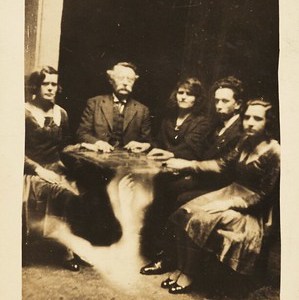
Aside from Kripal’s talk, at least two other examples come to mind. Joshua Cutchin, an “amateur” scholar to be respected, will be giving a course The Near-Death Experience under the auspices of the Kosmos Institute (whose self-description as concerning “mythology, esotericism, archetypes” seems to include it in the kind of discourse here under discussion). The course description suggests it develops matters addressed in Cutchins’ recent Ecology of Souls: A New Mythology of Death and the Paranormal (2022). It is not immaterial that this work references both Yeats and Evans-Wentz, for the former had already formulated a kind of General Theory of Apparitions, drawing from the Neoplatonist Porphyry, identifying Fairies and their ilk and the souls of the dead materialized during séances, both made of “soul stuff,” a manner of “subtle body” (remarked, also, by Kripal), the substance, by extension, of our ufonauts, indeed, of all those “nonhuman intelligences” that present themselves in different forms throughout human history, or so our modern occultists’ story goes. (That is, perhaps we are not dealing with a variety of entities but with one Other that manifests in this variety of ways…). Nor is it any less accidental that Jacques Vallée, too, references Evans-Wentz in his Passport to Magonia (which, too, proposes a deeper root shared by so-called “Nonhuman intelligences” said to interact with human beings) and, though I cannot find the title indexed in any of his published volumes, I swear I’ve read him refer to Lodovico Maria Sinistrari’s De Daemonialitate, et Incubis et Succubis, a volume familiar to those occultists a century or so past, both in North America and England; nor is Vallée’s “Rosicrucianism” unknown (Rosicrucianism an inflection of the occult tradition examined by Tryphonopoulos, which, he reminds us, finds its origins in a Seventeenth century hoax (what today we would term a “psyop”)). Nor should one overlook the influence of Whitley Strieber (a collaborator of Jeffrey Kripal’s) in this regard, a self-confessed adherent of Gurdjieff, another figure in the earlier occult foment discussed by Tryphonopoulos.

Believers in the views put forth by Kripal, Cutchin, Vallée, Strieber and others will likely see the case I make here as a vindication of those views, as if they were the most recent inflection of a perennial, universal story of human interaction with the supernatural. My contention, however, is more critical. For, however “comparative” the studies of Kripal and Cutchin (and Diana Walsh Pasulka…), for example, they strike me, as far as I can determine, remarkably blind to history, or, more precisely, historicity. What I mean is that comparative studies always demand a moment of philological labour and scrutiny sensitive to how temporally- and culturally-distant artefacts can be understood, a sensitivity to the insurmountable difference of the Other (which, at the same time hardly precludes the possibility of what Hans-Georg Gadamer termed “the fusion of horizons”), a case I have often made here. Kripal et al. who maintain “the phenomenon has always been with us” hardly represent an unbroken line of gnosis (as if that claim would not be unproblematic in itself!), but rather, again, articulate an “absolutely modern” response to modernity, the epoch determined by the advent of the natural sciences, enlightenment, and technoscience, which themselves are more profoundly determined by the rise of capitalism, within whose horizon “all that is solid melts into air.” Little surprise, then, that we should witness a repetition (which is always different) of ideas that were themselves a reaction to an earlier iteration of the same circumstances. As things stand, this position that “the phenomenon has always been with us” rests on little more than comparative folklore, mythology, or religion, comparisons that, in turn, rest upon a semiotic and hermeneutic naivety at least.

That being said, I need, at the same time, remark a funnily apropos synchronicity. The morning I would finish this post, I sat down with my breakfast and turned on our television, which, somewhat mysteriously (I couldn’t’ discover the channel that was broadcasting it on the channel guide) was tuned to Cronenberg’s A Dangerous Method, his film about Jung and Freud, precisely the scene linked here:

Another not an Other

A friend recently shared this meme of “What-the-Dalai-Lama-told-John-Mack” (which I haven’t fact-checked), which, along with the recent publication of Diana Pasulka’s Encounters: Experiences with Nonhuman Intelligences prompts this post.

As readers here will know, one engine of thought here at the Skunkworks is the thesis that the very idea of technologically-advanced, extraterrestrial civilizations is ideological, that is, treating a profoundly contingent cultural formation (namely, that of the earth’s so-called “advanced” societies) as if it were somehow natural or universal. The Extraterrestrial Hypothesis (ETH) for the origin of UFOs/AUP merely projects “First World” humanity as a paradigm of “intelligence” and “technology” onto the cosmos.

However, recent reflections on “the Phenomenon,” taking their cue, arguably, from Jacques Vallée’s Passport to Magonia combined, sometimes, with more recent, original research, depart from the conjecture that UFOs/UAP hail from an extrasolar civilization. Following Vallée, it is proposed that the mind-boggling variety of entities encountered in relation to flying saucers, UFOs, and UAP are part of a broader, human tradition of interaction with nonhuman intelligences. As Pasulka writes in the introduction to her new book (in her characteristically breezy style): “Traditional religions, including Christianity, Islam and Judaism, as well as Buddhism, and Hinduism, in addition to Indigenous communities, include some recognition, in parts of their histories and traditions, either acknowledging or pondering the existence of extraterrestrials or nonhuman intelligence, or do not discount it” (8).

In this notion of “nonhuman intelligence” there seems something unreflected, and that is the very (reported) fact of human/nonhuman interaction, an interaction that is more like human-to-human interaction than that between different species. If these entities are not of the family Homo (and even within that family mutual recognition is restricted), then the grounds of the mutual recognition between human and nonhuman beings is mysterious (if not downright mystical). I have argued this point with regards to intelligent extraterrestrials: there is no obvious reason why They should recogize Us as their technologically-advanced, intelligent Other. The same reasoning is arguably applicable to the nonhuman intelligences posited by Vallée, Pasulka, et al.

Within the context of the Abrahamic religions, the interaction between humankind, angels, and demons is not suprising, however, given that they all spring from the same Creator, Man being made in His image. Just how an analogous thinking is operative in the traditions Pasulka lists above, she—the religious studies scholar—would know better than I, but my hunch is this analogue is present in one inflection or other in them all. It follows, then, that myths, traditions, stories, or reports of “face-to-face” interaction with nonhuman intelligences, at least within the context of a Darwinian understanding of life, intelligence, and consciousness, betray an anthropomorphism if not an anthropocentrism. In our average-everyday reality, human-to-human interaction differs from interspecies interaction, and interaction between human and nonhuman “intelligent” beings would be an instance of the latter, not the former.

This reflection reveals a deeper, unquestionable anthropocentrism. The very idea of “nonhuman intelligence,” as it is deployed in talk about “the Phenomenon,” excludes out of hand the “intelligence” of all other forms of life on earth (which is ironic given the way that non-Abrahamic traditions—“Buddhism, and Hinduism, in addition to Indigenous communities”—think of nonhuman beings in ways markedly more empathetic). As I have argued, there’s no such thing as intelligence. That is, the concept of “intelligence” denotes not some quality or characteristic in-itself, but is a piece in some language game (e.g., that of various fields of psychology, artifical intelligence research, etc.) possessed of significance only relative to its particular use. Just as the concept of technology is unreflectively inflated and projected onto the cosmos by the thinking that goes on in the ETH and the Search for Extraterrestrial Intelligence, too often in ufological talk, even in this latest inflection, “intelligence” appears blindly applied only to human, all-too-human (so-called) Others.

Ground Zero of the Real: a note on “ontological shock”

In my most recent “Sightings” post, I remark Ed Simon’s “We’re About to Find Out What We Really Know About UFOs,” which repeats a well-worn thesis about “First Contact” between humankind and a (more) technologically-advanced, extraterrestrial civilization:

The moment of “first contact” between humans and extraterrestrials has been extensively imagined in science fiction and in entertainment (and, of course, among UFO enthusiasts who claim such events have already occurred). Central to the depiction of an auspicious meeting between two radically different cultures or species is the sense of mass disorientation, collective anxiety, and “ontological shock” (a term coined by philosopher and theologian Paul Tillich to describe what happens when one’s entire sense of reality is disrupted)….

This ontological shock would be different from mere discovery or invention; it’s not even synonymous with what the philosopher Thomas Kuhn called a “paradigm shift,” when scientific consensus is amended by some revolutionary new theory. Rather it’s an apocalypse—in the sense of the word’s original Greek meaning of “unveiling”—whereby the true nature of reality is radically altered. 

I noted the not-unproblematic, too-easy conflation at work in depictions “of an auspicious meeting between two radically different cultures or species,” a disjunction that calls for circumspection. “A meeting of two, radically-different cultures” describes well that between, e.g., Europeans and the indigenous peoples of what the former termed the “New World;” the science-fictional First Encounter scenario would be between two, radically-different species (however much the alien species might be imagined to possess a culture—and it would have to (however much the notion of “culture” here occludes the material formations of the society at the foundation of that alien species’ technological sophistication…)).

Simon’s too-easy conflation passes over the problem of mutual recognition I note in my previous post and elsewhere: one can as easily imagine that even if the alien Other is “technological” it may well fail to perceive Homo Sapiens as its alien Other. To say too much too quickly (though I have argued this point extensively), what underwrites the believability of the science-fictional, First Contact scenario, what makes it easy for us to entertain, is that the alien Other is a fun-house mirror-image of ourselves, and not even, strictly, of Homo Sapiens, but one, recent and far-from-global societal inflection of Homo Sapiens….

But what I want to probe here is the notion of “ontological shock” invoked by Simon and most others with regard to the First Contact scenario. First, I would recast if not update Tillich’s “ontological shock”. Philosopher Slavoj Žižek is instructive in this regard, in his work on the 9/11 attacks and related matters, Welcome to the Desert of the Real. There, he contrasts “everyday social [lower-case ‘r’] reality” with that “Real” that explodes our expectations concerning that “average everydayness”, such as the 9/11 attacks or Ernst Jünger’s experience as a storm trooper in the Great War of “face-to-face combat as the authentic intersubjective encounter.” In general, the irruption or intrusion of the Real recasts, redefines, and reconfigures what we had taken for normal or possible or “real”.

There is a small but growing bookshelf of works concerned with the sociocultural implications of the unquestioned discovery of extraterrestrial life, among them Steven J. Dick’s edited collections The Impact of Discovering Life beyond Earth and Astrobiology, Discovery, and Societal Impact, as well as Extraterrestrial Intelligence: Academic and Societal Implications edited by Andresen and Torres. That being said, one wonders just how much of an “ontological shock” such a real discovery or encounter would be, the putative Reality of such an event’s being, as noted above, merely (“mirrorly”) a distorted real. That is, the condition of possibility of our recognizing this Other as an Other is not its Otherness but its resemblance to ourselves. There is thus an ineluctable dialectic if not paradox in the very possibility of such an encounter: to encounter the alien is possible ony insofar as the alien is familiar or recognizable.

Moreover, the possible alienness of the Other is, at this point, somewhat worn and, imaginably if not arguably, blunted. The Eurocentric cultures have lived in a context of First Contact in their imaginary for millennia. The idea and problematic of the Plurality of Worlds is perennial, from Lucian’s A True Story (Second Century CE) to the astral travels of Swedenborg down to our own science fiction and the ubiquitious image of the Grey. Indeed, this thematic is so much part of the cultural air we breathe, ufologists have long suspected in the modern, post-1947 era, that such science-fictional material, especially the tele-cinematic, has been part of a program of slow Disclosure. More generally, nearly if not all cultures have stories about our cohabitating with nonhuman others. We need not take these stories literally, but, in light of the prevalence of this thematic, as History’s Ancient Aliens says, it’s not too far off the mark to admit that, in a very real sense (i.e., in our everyday reality…) “We have never been alone.” In light of the logic of First Contact (the Other’s needing to be recognizable) and the empirical fact that, at least in the Symbolic order, we have already undergone First Contact long ago, it seems not illegitimate to wonder how “Real” the news of First Contact would turn out to be. The recent film Don’t Look Up is instructive: if humankind is nonplussed about the very real, unprecedented threat of climate change to organized society if not human survival (in the most pessimistic scenarios), how much less would be the shock of learning “we are not alone”, an idea which has been in the air for as good as forever?

A recent, actual “ontological shock” was supplied by the theory of evolution, for which Homo Sapiens are only one species among others. Darwin’s work, preceded by the geological discoveries that suggested earth was much older than 6,000 years, deeply disrupted the real of Nineteenth Century societies, in a way which seems now remarkably forgotten, at least for the most part. The shockwaves, however, continue, in research into animal and plant intelligence and the consequent call for animal rights (from the Society for the Prevention of Cruelty to Animals founded in 1824 to the work of philosopher Peter Singer) and the granting of legal rights to rivers and lakes, for example. These developments in real interspecies relations constitute arguably an irruption of the Reality of other species into the real, wherein they are presently brutalized instrumentalized. It is no accident that this re-orientation is one from Eurocentric (Abrahamicapitalist) worldviews to values present in more traditional, indigenous ones, this latter too-often no less repressed, oppressed, and murderously abused than the Nature with which they were often identified (as, for example, in the doctrine of Terrus Nullius).

Despite the recent journalistic and governmental surge of interest in UAP and nonhuman intelligences, the UFO/UAP is possessed of a relevance to culture and society more profound than the cynical, deceptive ploys at work since, most notably, 2017. The very idea of these technologically-advanced, nonhuman intelligences, whether in the fevered comments, posts, and podcasts of the ufomaniacal or the more rational research protocols of the Search for Extraterrestrial Intelligence, rises from the unconscious (ideology) of earth’s “advanced” societies. An analysis of these societies’ imaginary unmasks a narcissistic, self-serving (-preserving) idolatry that blinds their members to the possibility of a Real, progressively real encounter with those Other lives that have always lived with us, those species of life whose Reality we have perverted and domesticated into a comfortable, abusive reality.

There’s no such thing as intelligence

As my professional corrupting-the-youth wound down, I had been inclined to essay a few thoughts on the Ultra/Cryptoterrestrial-as-ecological-ideal, but, given the recent hysteria around and about Artificial Intelligence (AI), General (AGI) and otherwise, and now the latest tempest-in-the-ufological-teapot, David Grusch’s “revelations” about “The Program”, its baker’s dozen of captured nonhuman vehicles and some of their pilots (…), it seems more urgent to address, again, the concept of intelligence with regards both to artificial “intelligence” and speculations about extraterrestrial, nonhuman intelligences, since a perverse notion of “intelligence” determines both.

Today’s concerns over AI and AGI are an illuminating index of an idea of “intelligence” at work in society-at-large (which society? which groups within it, exactly?…). There is strong warrant for maintaining that AI and AGI are not in any concrete, robust sense “intelligent” at all; while, in the same breath, one cannot merely brush aside the very real, operative (if however poorly-reflected and unconscious) understanding of “intelligence” guiding AI/AGI research and development and the no-less real and admittedly-concernful implications this technology holds for the future, near and far.

Geoffrey Hinton, who recently left Google’s AI labs is, at the moment, the loudest voice in this room, and a good example. Consider the following, from recent conversations Hinton conducted with The Guardian. First, from the article linked above:

At the core of his concern was the fact that the new machines were much better – and faster – learners than humans. “Back propagation may be a much better learning algorithm than what we’ve got. That’s scary … We have digital computers that can learn more things more quickly and they can instantly teach it to each other. It’s like if people in the room could instantly transfer into my head what they have in theirs.”

And, from another, recent article:

“You need to imagine something more intelligent than us by the same difference that we’re more intelligent than a frog. And it’s going to learn from the web, it’s going to have read every single book that’s ever been written on how to manipulate people, and also seen it in practice.”

Notice the too-easy conflation of information technology and the human brain (where’s the human being?). The new machines are better and faster at learning than humans, because the machines operate according to “a much better learning algorithm than we’ve got.” (I pass over the egregiously mistaken belief that the internet contains “every single book that’s ever been written on how to manipulate people” and that an AI can “see” (understand) such manipulation “in practice”…). Can a machine, strictly (i.e., in the sense we apply this word to a human being or an another organism, for that matter), be said “to learn”, and does the human brain or being learn in an algorithmically-governed way?

Hinton’s thinking comes out of his research background. A cognitive psychologist and computer scientist by training, he “for the last 50 years,” as he says, has “been trying to make computer models that can learn stuff a bit like the way the brain learns it, in order to understand better how the brain is learning things.” As with too many contemporaries, Hinton’s thinking drifts from trying to model the workings of the brain via computer to conceiving the brain as a computer: “A ‘biological intelligence’ such as ours, he says, has advantages. It runs at low power, ‘just 30 watts, even when you’re thinking‘.” What results is a too-easy, default equating of machine and brain (let alone mind). This not very deeply or rigorously reflected identification by virtue of which the brain is conceived as a machine by the same token warrants speaking of machines as if they were brains or minds, learning, discerning, or otherwise displaying “intelligence” if not self-awareness. No computer “remembers” or, by extension, “learns”, or “recognizes” or “thinks”: such expressions are all anthropomorphic shorthand, grasped at by cyberneticists out of necessity (lacking a vocabulary specific to the functioning of the calculations of what Victorians termed a “difference engine”) that have since gone on to bestow an illusion of humanity on the nonhuman, let alone nonliving. Much of the anxiety about AGI finds its source in linguistic confusion.

One could say more: that “intelligence” evolved (…); that it is embodied (that it’s not just a property or faculty of a brain); that it is ecological (it is relation between an organism and its environment, the driver for its evolution); and, at least in Homo Sapiens, social or cultural (articulated in symbolic systems, such as natural language). For these (and other) reasons, Large Language Models, such as ChatGPT, do not write, speak, or mean, as the software does not exist in a world the way human beings do, a situation which grounds intention and reference, in a word, meaning. ChatGPT is an example of what theorists Julia Kristeva and Roland Barthes termed “intertext”, “the already written”, precisely the sample ChatGPT statistically analyzes for syntactical patterns to reproduce….

So, if AIs are not, strictly, “intelligent,” what, then, of those technologically-advanced aliens imagined by the ufologically-inclined who adhere to the Extraterrestrial Hypothesis (ETH) regarding the origin of UFOs or that more sobre concept at work in the Search for Extraterrestrial Intelligence (SETI)? What’s at work in both is undoubtedly complex. In one regard, there is the supposition that, where conditions are right (as they were on earth), natural processes produce life, life evolves awareness/consciousness/sentience and intelligence, and intelligence produces technology, which advances in sophistication and power. However, we do not know how or which natural processes produce life, nor the material/biological bases for consciousness. And, as readers of the Skunkworks will know, that conjunction of intelligence and technology is itself not unproblematic.

Indeed, the very conjunction of the two is obscure. At times, it seems technology is the sign or symptom or, logically, the sufficient condition of/for intelligence (as in SETI’s search for technosignatures, whether signals or traces of industrial processes in an exoplanet’s atmosphere or the dimming of a star caused by a Dyson Sphere); in the same breath, intelligence (of a certain order) is thought to imply the development of technology. Thus, intelligence and technology are assumed to be mutually implicated. However, the “intelligence” that invents what we now experience as technology (which is distinct from mere tool use) is not general intelligence (let alone “consciousness”) but instrumental reason, its teleological and calculative use. More profoundly, technology-as-we-know-it in this industrial/post-industrial sense is more the product of social, material processes than some ideal/mental/spiritual March of Progress. As such, it is profoundly historical, in a manner even more contingent and aleatoric than that process of evolution that supposedly gave rise to consciousness and intelligence. Indeed, the more closely the concrete history of the advent of today’s “advanced societies” is scrutinized the more complex and contingent the relation between “intelligence” and “technology” becomes. The search for extraterrestrial, technological civilizations comes to appear as little more than the laughable and futile search for some exoplanetary version not even of “ourselves” but of what has been termed “the First World” (or some science-fictional projection thereof).

Both the ETH and SETI are skewed by their identifying “intelligence” and “technology” with the example of a small minority of one species on one planet, an identification which serves more to reinforce and reproduce a certain social formation of that species that to illuminate not only life on other worlds but life on this one. Indeed, the more animal and even plant “intelligence” is researched, freed from ontotheological, anthropocentric blinders, the more intelligence is seen to transcend mere instrumental reason. In this regard, philosopher Justin E Smith-Ruiu’s “Against Intelligence” makes a lively, eloquent case for a radical expansion of the concept of intelligence, which I summarize, here:

…the only idea we are in fact able to conjure of what intelligent beings elsewhere may be like is one that we extrapolate directly from our idea of our own intelligence. And what’s worse, in this case the scientists are generally no more sophisticated than the folk….

One obstacle to opening up our idea of what might count as intelligence to beings or systems that do not or cannot “pass our tests” is that, with this criterion abandoned, intelligence very quickly comes to look troublingly similar to adaptation, which in turn always seems to threaten tautology. That is, an intelligent arrangement of things would seem simply to be the one that best facilitates the continued existence of the thing in question; so, whatever exists is intelligent….

it may in fact be useful to construe intelligence in just this way: every existing life-form is equally intelligent, because equally well-adapted to the challenges the world throws its way. This sounds audacious, but the only other possible construal of intelligence I can see is the one that makes it out to be “similarity to us”…

Ubiquitous living systems on Earth, that is —plants, fungi, bacteria, and of course animals—, manifest essentially the same capacities of adaptation, of interweaving themselves into the natural environment in order to facilitate their continued existence, that in ourselves we are prepared to recognize as intelligence….

There is in sum no good reason to think that evolutionary “progress” must involve the production of artifices, whether in external tools or in representational art. In fact such productions might just as easily be seen as compensations for a given life form’s inadequacies in facing challenges its environment throws at it. An evolutionally “advanced” life form might well be the one that, being so well adapted, or so well blended into its environment, simply has no need of technology at all.

But such a life form will also be one that has no inclination to display its ability to ace our block-stacking tests or whatever other proxies of intelligence we strain to devise. Such life forms are, I contend, all around us, all the time. Once we convince ourselves this is the situation here on Earth, moreover, the presumption that our first encounter with non-terrestrial life forms will be an encounter with spaceship-steering technologists comes to appear as a risible caricature.

In this light, there is such “thing” as intelligence (just as, as Fichte argued so long ago, there is no such “thing” as consciousness). “Intelligence” is a concept, a construct, variously articulated and put to various uses throughout its history. Thus, the concept calls for vigilant scrutiny whenever and wherever it is deployed to wrest it of its apparent, reflexive naturalness and reveal its limits and more importantly the purposes to which it is being put. Indeed, how better to enable ourselves to be able to recognize a truly Other instance of “intelligence” than freeing the concept from the human-all-too-human version that masquerades as intelligence-itself?

Excursus

The problematic broached here is one that demands an entire research program. With regards to “intelligence”, what is demanded is a “destruktive” history of the concept that would desediment and dissolve its apparent univocity and naturalness. At the very least, such a study would splinter that apparent unity into the various ways the concept has been developed and debated in the psychological literature.

In terms of the conjunction of intelligence and technology in SETI, at least one dilemma presents itself. Is the conjuction “Platonic” (let alone ideological) or it possible to argue for a real possibility of an extraterrestrial, technologically-advanced civilization on purely statistical, probabilistic grounds? (My intuition is that even this latter argument, however valid, is motivated by a certain, covert Platonism….).

First Rumour of Limina’s Inaugural Symposium

While readers here breathlessly wait for my forthcoming post on the Inaugural Symposium for Limina: The Journal of UAP Studies, they might be interested in this interview with some of the participants conducted by German journalist Robert Fleischer, viewable here.

I observe in passing Fleischer’s guests might skew a viewer’s impression of the orientation of the symposium and Limina with regard to the matter if not problem or question of UAP, given that three of Fleischer’s guests and Fleischer himself are all members of ICER, the International Coalition for Extraterrestrial Research, whose official position on “contact” is that “Contact and interaction between humans and extraterrestrial/non-human intelligences (NHIs) on a global scale, [sic] is a reality.” Francisco Mourão Corrêa, for example, is the founder of Exopolitics Portugal. Prof. Tim Murithi’s proposals align themselves with those of Stephen Bassett’s Paradigm Research Group whose stated objective is “to advocate in all ways possible for an end to a government imposed truth embargo of the facts surrounding an extraterrestrial presence engaging the human race – Disclosure.” Fleischer’s two other guests, Prof. Erling Strand from Project Hessdalen in Norway and Dr. Beatriz Villaroel from the Nordic Institute of Theoretical Physics in Sweden, represent less-invested perspectives, focussed on empirical research that has yet to come to any conclusions regarding the nature of UAP let alone their relation to NHIs, despite Strand’s being a member and representative of ICER.

That being said (or remarked), Corrêa does make clear that part of his team’s presentation at the symposium concerned Project Stellar, an inter- or multidisciplinary research initiative that marshals both the hard (natural) and social sciences (including some humanistic disciplines, e.g. philosophy) to study UAP, a project whose putative approach suggests a less invested stance to the phenomenon. Likewise, Dr. Beatriz Villaroel’s Vasco Project searches for potential evidence of probes of extraterrestrial origin, somewhat along the lines of the likely better-known Galileo Project. Which is all to say that the general tenor of the symposium was more akin to the tentative approach articulated in this interview by Prof. Strand than the persuaded if not convinced stance adopted here by his interlocutors. More, forthcoming!

Human, all-too-human, nonhuman species…

Regular visitors here may have been puzzled or concerned about this site’s recent silence. Matters on the domestic and poetic fronts have been more pressing of late, and the recent unfolding of the myth of things seen in the sky hasn’t been very inspiring. Luis Elizondo, Chris Mellon, & Co. continue to embarass themselves with their wince-inducing ignorance of UFO history, and the recent kerfuffle around the Calvine photograph raises the same old dust, nor does Jeffrey Kripal’s newest book touch any nerves of mine (though that may change on closer scrutiny…).

But, then, as chance would have it, a perennially-irritating confusion comes again into view. Greg Bishop, the admin for the Radio Misterioso FB page, shared an article from The Guardian via George Knapp, “Talking to whales: can AI bridge the chasm between our consciousness and other animals?”, with the comment “If this group is successful in achieving communication with whales, it may be wonderful, or frightening, or both. It may also teach us how to look for signatures of nonhuman life by using insights to an alien species that shares the same planet with us.”

It’s that second sentence that caught my attention. At first, even the grammar had me flummoxed. I take Bishop to mean that the work of the groups mentioned in The Guardian article “may also teach us how to look for signatures of nonhuman life by applying its insights to an alien species that shares the same planet with us.” And there’s the rub: the thinking seemingly at work here about “nonhuman life” and that “alien species that shares the same planet with us.”

That alien species is, I surmise (given George Knapp’s being in on the conversation), the one that pilots what today are termed Unidentified Aerial Phenomena (UAP). These are almost invariably humanoid, not just morphologically, but, to some extent, culturally (and arguably socially), being technological, even if that technology transcends our present understanding. Even if UAP and alien-encounter events are staged (a la Vallée), that staging is still imagined to be carried out technologically. My point here is that this putative alien species (Mac Tonnies’ Crytpoterrestrials?) is only marginally nonhuman. Not only its form but its “form of life” (a la Wittgenstein: ‘a background common to humankind, “shared human behavior” which is “the system of reference by means of which we interpret an unknown language”’) are human, all-too-human.

One might justifiably ask by what warrant I venture to propose that these crypoterrestials might share a background of shared behaviour, a form of life close enough to that of some Homo Sapiens that would underwrite our more readily understanding these Others than those other, exoteric nonhuman species with which we cohabit the earth. What’s at work I argue in imagining that these terrestrial, alien species are both radically Other and technological is a conceptualization of technology that abstracts it from the social conditions of its actual coming-to-be. This impoverished notion of technology enables both its conflation with tool-use (so that even sharpened stones are “technology”) and its inflation to a kind of telos (essential goal) of intelligence that inspires fantasies about nonhuman, extraterrestrial, technologically-advanced civilizations, a hobby-horse (if not a bugbear) here at the Skunkworks. As I have explained (however cursorily) in an earlier post: “science and technology…are woven from the fabric of the society within which they appear and operate; they are cultural phenomena through and through.” Technology, thought concretely, is bound up with a form of life, such that, any other parahuman, technological species would already be close enough to technological Homo Sapiens that attempting to understand them would be more akin to that which occurs between different human groups than that between humans and other animals.

What’s at stake in these reflections is not so much the reality of these crypoterrestrial Others (attentive readers will have noticed nothing I have written denies outright their possible being) but how we understand and relate to those unquestionably real, nonhuman Others with whom we cohabit the earth. In seeing the promise for communicating with imagined creatures who mirror us in research into interspecies communication one oversells the strangeness of these putative Others and undersells the undeniable Otherness of really-existing animal (and plant) life. That more concerned parties are not struck by how much more alien actually-existing nonhuman life forms on earth are, compared to those “alien” beings that inhabit the ufological universe increasingly puzzles and saddens me. The fascination with crypto- or extraterrestrials betrays a narcissistic longing to encounter some version of ourselves instead of the unquestionable Otherness of our plant and animal kin whose profound difference provides a broader and deeper insight into the abyssal mystery of our creature-being.

Zooming in on the Archives of the Impossible Conference: Day Two (4 March 2022): Whitley Strieber, “Them”

Here, I continue my commentary on the plenary sessions of Rice University’s Archives of the Impossible conference. My notes on Jeffrey Kripal’s opening remarks and Jacques Vallée’s keynote address can be read, here, while those on Diana Pasulka’s plenary address are viewable, here.

Friday, I missed Leslie Kean’s plenary talk, “Physical Impossibilities: From UFOs to Materializations”, but I was eager to catch Whitley Strieber’s, not only because of his reputation, but moreso because he has co-authored a book with Jeffrey Kripal, The Super Natural.

Strieber, being a writer, delivered a relatively eloquent talk, in a mellifluous, cadenced voice. He began, after a series of gracious, thoughtful acknowledgements, confirming the notion Jeffrey Kripal laid out yesterday, that the paranormal is a unified field, underlining the unity of the Visitor experience and the mystery of death, stressing the phenomenon demands to be approached “holistically” and interdisciplinarily.

The body of his discourse was the presentation and analysis of one of the many letters he and his wife received in the wake of Strieber’s publishing Communion, a large number of which are now housed in the Archives of the Impossible. Strieber proposed to read the story the letter related according to the myth of Ariadne, Theseus, and the Minotaur: the role of Theseus is played by the family who experience an encounter with the Visitors; the Labyrinth is our dark, confused world; the Minotaur is fear and anger; Ariadne is the consciousness behind and controlling the Visitor experience; and the thread, the process of human perception, the way it domesticates the wildly strange, tempering fear with curiosity. He managed to unfold the letter’s account according to his proposed schema in an easy to follow manner, however unconvincing….

What struck me was Strieber’s stressing how the Visitor experience “is a communication of a kind”, related to the myths of all cultures. Indeed, it’s because Strieber perceives this link between the experience and myths that he ventures to read the letter the way he does, going as far as to claim that an acquaintance with myth is necessary to understand Contact and “the grammar of Communion.” In this regard, Strieber seems to echo Vallée’s contention in his keynote address, that the phenomenon “is not a system but a metasystem”. Someone not unfamiliar with the developments of last century’s literary theory might say it is a language (myth).

Ironically, however much Strieber is at pains to stress the pertinence of our mythological inheritance in understanding Contact, his own acquaintance with the myth he deploys is weak. It’s not the case that Ariadne saves Theseus from the Minotaur by guiding him out of the Labyrinth with her thread, but that her thread enables him to navigate the Labyrinth in order to slay the Minotaur and emerge again. Strieber is correct that Theseus abandons Ariadne after his exploit, but says that she weds Dionysus “the god of joy” and thereby becomes holy, a becoming holy (whole, complete), Strieber maintains, being the “inner aim of Contact”. But by what warrant does Strieber identify Dionysus/Bacchus with “joy”?…

Not only does he betray only a loose acquaintance with the myth he would employ, but, I would argue, he confuses myth with myths. That is, if the Visitor/Contact phenomenon operates at a mythological level, from the point of view of structural mythology, it is not because of how its various narratives might echo other narratives, but because of its structure, which is that of myth. Myth, like language, is a form not a substance. He does seem to unconsciously grasp this approach, when he draws attention to various actions in the letter he analyzes (and, no!, he does not “deconstruct” it!) when he remarks various actions that occur along the vertical axis: one Visitor leaps from a water silo, they appear in the trees, the family ascends to the second story of their home to get a better view of the beings, etc., an observation typical of a structural analysis of myth or narrative. Strieber’s exegesis of the letter is illuminating but, ironically, despite the allegorical machinery he brings to bear….

One must wonder, too, if he were present during Vallée’s presentation and his warnings concerning the truths intelligence agencies relate, as Strieber at one point emphasized how the U.S. government recently admitted that the leaked Tic-Tac and Gimbal videos depicted vehicles of unknown origin….

So, like Jacques Vallée’s keynote address, Whitley Strieber’s contribution, though smoothly delivered and containing some provocative insights, fails to persuade because of, ironically, its weak grasp of essential aspects of its own argument, here the very myth he would use to construct his discourse, if not mythology as such itself….

Sightings: Saturday 6 November 2021: Science / Magic, “adaptively variable behavior” and related matters

This past week what caught the eye and/or sparked a thought was Arthur C. Clarke’s Third Law, Magic, and Science, and an Indigenous confirmation of the views I recently brought to bear against The Galileo Project and the attendant paradoxical implications of Star People….

I don’t often nod to other websites (Skunkworks should have a blog roll…), but a recent post at Curt Collins’ The Saucers That Time Forgot gives me the opportunity to draw attention to some of those I follow.

Collins’ post addresses Arthur C. Clarke’s famous Third Law: “Any sufficiently advanced technology is indistinguishable from magic,” pointing out how “Almost from inception, the phrase has been used and abused to the point of cliché.” In doing so, Collins not only helps to clear away some of the fuzzy thinking that obscures the UFO phenomenon, but raises another topic of broader if not graver import.

Anyone familiar with the writings of Renaissance scholar Frances Yates will know how entwined magic and science are, mixed together as they are in the foment of Hermeticism and related movements just before the foundations of the Royal Society (the original Invisible College) were being set down. Both seek to control nature and their respective natures are much more closely related than the pedestrian history or philosophy of science would comfortably admit with their story of the triumphant emergence of enlightened, rational natural science from the obscure mysticism of alchemy and its ilk.

Today, Newton’s interests in alchemy, astrology, and labours to interpret Biblical prophecy are better, if not well, known. What is less known (but not to readers of Yates) are Descartes’ and Francis Bacon’s interest if somewhat unclear involvement in Rosicrucianism. This mutual implication of Magic and Science (and, by extension, technology) is happily the topic of serious research, a good primer of which can be found at independent scholar Andreas Sommers’ Forbidden Histories (which can be followed, too, on Facebook). Sommers’ Essential Readings is a small library sufficient to deconstruct in the rigorous sense the Science/Magic (or as Sommers terms it, the Natural Magic / Scientific Naturalism) binary.

Interested parties are also urged to check out the The Renaissance Mathematicus, which regularly and with much gusto takes the piss out of received ideas about the emergence of science from the Humanist dogmas of the Renaissance….

Pursuant to my critique of Loeb and his kind who identify intelligence with human, instrumental reason, the recently-published volume, The Mind of Plants: Narratives of Vegetal Intelligence, was brought to my attention (synchronicitously or otherwise…). Edited by Dennis McKenna, the book collects short essays, narratives and poetry by authors from the humanities, social, and natural sciences on plants and their interaction with humans. YES! Magazine published an excerpt from Robin Wall Kimmerer‘s contribution, “Hearing the Language of Trees”, wherein she writes:

The story of intelligences other than our own is one of continual expansion. I am not aware of a single research study that demonstrates that other beings are dumber than we think. Octopi solve puzzles, chickadees create language, crows make tools, rats feel anxiety, elephants mourn, parrots do calculus, apes read symbols, nematodes navigate, and honeybees dance the results of cost-benefit analysis of sucrose rewards like an economic ballet. Even the slime mold can learn a maze, enduring toxic obstacles to obtain the richest reward. The blinders are coming off, and the definition of intelligence expands every time we ask the question.

The ability to efficiently sense, identify, locate, and capture resources needed in a complex and variable environment requires sophisticated information processing and decision making. Intelligence is today thought of as “adaptively variable behavior,” which changes in response to signals coming from the environment.

Kimmerer’s position here harmonizes sweetly with that taken by my last post and Justin E. Smith’s argument concerning intelligence I condense there.

Kimmerer’s Indigenous perspective is one where “human people are only one manifestation of intelligence in the living world[;] [o]ther beings, from Otters to Ash trees, are understood as persons”, all of whom share “a past in which all beings spoke the same language and life lessons flowed among species”, a worldview at curious odds with that one chronicled by, among others, Ardy Sixkiller Clarke, whose stories relate encounters with humanoid sky gods, giants, little people, and aliens among indigenous people. One is tempted to wonder why a world already inhabited by manifold intelligent creatures, intelligence freed from an anthropomorphic fetish, contains, too, nonhuman but nevertheless all-too anthropomorphic intelligences….

Sighting: Sunday 25 April 2021: Justin E. Smith’s “Against Intelligence”

I don’t know how he does it. Philosopher Justin E. Smith, very much my contemporary, and even once a faculty member of my alma mater here in Montreal, not only functions as an academic in a French university, teaching, researching, and writing articles and books, but he maintains a Substack account where he posts juicy essays weekly. With regards just to that writing, he tells us

In case you’re curious, I spend roughly six hours writing each week’s Substack post, taking the better part of each Saturday to do it. This follows a week of reflection, of jotting notes about points I would like to include, and of course it follows many years of reading a million books, allowing them to go to work on me and colonize my inner life nearly totally.

At any rate, his latest offering harmonizes sweetly with our own obsessive critique of anthropocentric conceptions of intelligence. You can read his thoughts on the matter, here.