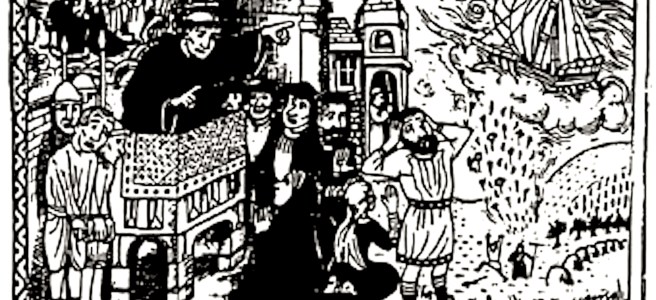
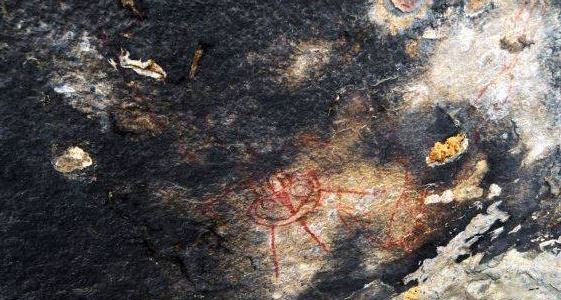
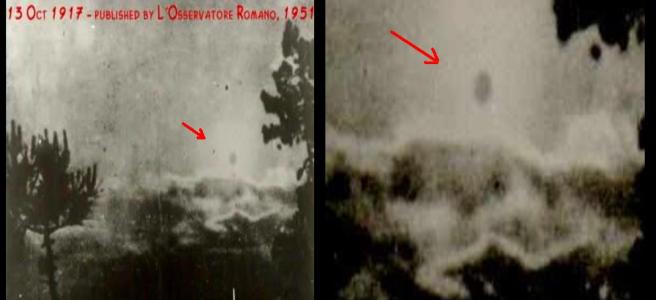
Here, I share a poetic sequence from my second trade edition Ladonian Magnitudes, “Magonian Latitudes,” which concerns (among other things) those tales of ships in the skies from the Middle Ages that inspired at least the title for Jacques Vallée’s canonical Passport to Magonia. The sequence includes a version of a story that was to be repeated during the Mystery Airship wave of 1896/7, as well as reference to cave paintings thought by some to evidence alien visitation in prehistory, and broaderband thematic resonances of the these stories…
Tag: Magonia
More from Orthoteny (w.i.p.): Magonian Latitudes
Last week, I shared one section from a long poem, “Magonian Latitudes” (from my second trade edition, Ladonian Magnitudes), that rimes with another section from my treatment of the Phantom Airship Mystery of 1896/7.
Here, I share the entirety of the poetic sequence, an attempt to wind together the notion of the myth-as-myth and allusions to ancient (and medieval) aliens. It has six sections, the beginning of each indicated by the bolded, upper-case first letter of the section’s first line.
Poetically, this sketch for a part of Orthoteny (my work-in-progress dealing with the myth of things seen in the sky in its totality as explored here at Skunkworks) draws on a catholic sampling of the poetics of international, Twentieth-century poetry. It ain’t no doggerel!
Magonian Latitudes
…there is a certain region, which they call Magonia, whence ships sail in the clouds…
A change of dimension
not just locale
Like lungs for gills
or water to air
Horses, bison, mammoth, ibex,
numberless others unheard of
Rendered on cave-walls
palimpsest thick
Yet on the ceiling alone
in threes and fours
Flying Saucers hover
over their occupants
The Cabalist Zedechias
in Pepin’s reign
Sought to convince the world
Daimonas Sadaim
Neither angelic nor human in kind
inhabit the Elements
Required the Sylphs show themselves
in the Air for everyone
Which they did sumptuously
in the Air in human form
In battle array marching in good order
halting under arms or magnificent tents
Or the full sails of ships
riding clouds
When winds rose and blew
black clouds overhead
The peasants ran to the fields
to lift tall poles
To stay the ships
from carrying off
What rain or hail
culled from the crops
Called up by a tempestaire
for a tithe
Which practice persisted despite
the Capitularies of Charlemagne
The Sylphs saw alarm
from peasant to crown
Determined to dissipate their terror
by carrying off men
To show them their women
and republic
Then set them down
again on earth
Those who saw these as they descended
came from every direction
Carried away by the frenzy
hurried off to torture
Over all the lands countless tested
by fire or water
A marvel in Cloera County
interrupted Sunday Mass
It befell an anchor on a rope
caught in Saint Kinarus’ door-arch
Where the line ended in clouds
the congregation saw some kind of ship
One crewman dove and swam down
as if to free the flukes from the keystone
But they seized and would hold him
but that the Bishop
On grounds terrestrial air
may well drown one celestial
Forbade it
and freed
Quick as limbs can swim he rose
to hands on ropes and ladders
The anchor rang and cut
the line coiled down about them
The cave is a long way in from the mouth open to the sky
Generations there stare straight ahead on haunches
Higher up behind a fire burns
A wall before those hurrying past between
Both ways up and down the track there
Their burdens their shadows
One over her share
the water over the earth
The other in the firmament
the water over the earth
The air a mirror
Whose face is an ocean
waves electro-magnetic
There they stare dreaming
A quiet blue eye flickers
An Alien Abduction & a Fairy Tale: “Is that clear enough?”–A Note
In Forbidden Science: Volume Four: Journals 1990-1999, The Spring Hill Chronicles, Jacques Vallée writes in the entry for 1 January 1996:
In one recent case an abductee reports seeing human arms and legs piled up like firewood in a corner of a dark room, lit by a blue glow. Ufologists take it at face value. To me the scene has a stunning mythopoetic connection to Germanic fairy tales where a hero spends the night in a haunted castle; little men force him to play bowling games as they knock down bones using human heads that keep dropping down the chimney. In the tale a horrible being reassembles itself out of the members that have appeared chaotically. Is that clear enough?
With Passport to Magonia (1969), Vallée began to probe the relation between modern UFO sightings and entity encounters with premodern narratives, myths, legends, tales, and chronicles of aerial phenomena and meetings with nonhuman intelligences, arguing, at times, that their similarities suggest something about the mystery behind the UFO phenomenon. His approach, in general, has been richer and more sophisticated than the approach summed up in the name von Däniken, though not always. His journal entry (above) is hardly a summation of his own positions, but it is representative of certain pitfalls the line of inquiry can fall into.
As I have argued on a number of occasions, it’s not only the ufologists who take things at face value (as if “face value” were a simple, obvious notion…). All other provisos aside, a preliminary question is exactly how are an alien abduction narrative and a folk tale equivalent kinds of narrative? Before comparing these stories one need get clear on the narrative codes that govern or governed their composition and reception. For example, anyone who takes “at face value” the Hebrews’ forty years wandering in the wilderness after fleeing Egypt and Jesus’ forty days and forty nights retreat before beginning his ministry is simply ignorant of the rhetoric or hermeneutics at work in Biblical narrative.
But even before engaging such substantial and necessary matters, a number of other problems come to mind. Taken “at face value”, assuming that the abduction narrative was retrieved by means of hypnosis, a more parsimonious explanation is that the abductee had been exposed to the fairy tale Vallée has in mind in his or her childhood and the forgotten (i.e., unconscious) content has resurfaced in surreal fashion during the hypnotic regression. Or, if one wants to indulge a more Jungian than Freudian approach, one might posit that the dreamlike memories conjured up under hypnosis and the imagery of the fairy tale both spring from the same mental source, the creative or collective unconscious.
But most tellingly is what’s revealed to be at work in Vallée’s own mind. The “Germanic fairy tale” is very likely the fourth in the Brothers Grimm’s collection, “Märchen von einem, der auszog das Fürchten zu lernen” (“The Tale of a Boy who Went Forth to Learn Fear”). In this tale, there are no “little men” (that might count as analogues to the diminutive Greys presumably present in the abductee’s story), nor, strictly speaking, does “a horrible being reassemble itself out of …members that have appeared chaotically”: first one half, then another half of a man falls through the chimney; the two halves then reassemble themselves into a “hideous man.” Vallée has only dimly (mis)remembered the tale himself, fabulating a version as fictitious as the abductee’s hypnotically retrieved narrative in line with the point he desires both to perceive and make. Once we undertake the simplest philological labour, we see that the abductee’s story and the fairy tale as Vallée remembers it have next to nothing in common, other than, perhaps, certain psychological mechanisms that might be invoked to explain their respective creation.
Whatever what might finally be made of Vallée’s speculations concerning the sometimes very striking parallels between premodern and modern “UFO” narratives (as is the case with Faery and Alien Abductions), if his approach is to have more than a mythopoetic value (which I prize highly!), then a certain minimum of philological and hermeneutic reflection is called for. Is that clear enough?