Pretty much from the start, an essential distinction here at the Skunkworks, and one given to increasingly acute reflection, has been that between the being and the meaning of the UFO phenomenon, that is, between a concern with identifying and explaining the nature or cause of UFOs (answering the question, “What are they?”) on the one hand and an exploration of the infinite stories about UFOs in various media, including the original sighting reports themselves, and their meaning for culture and society at large on the other. The earliest articulation of our position on the question was the post “Concerning the Unreal Reality and Real Unreality of the UFO”. Persistent if impertinent prodding from Rich Reynolds necessitated further clarification with “On the Unreal Reality and Real Unreality of the UFO: redux, or “What we’ve got here is a failure to communicate…”. And, most recently, positions taken by Jeffrey Kripal and Hussein Ali Agrama and trenchant criticisms levelled by Mike Cifone inspired “’The theme has vista’: the question of UFO reality and the Myth of Things seen in the Sky” and “Getting to a root of the matter: a ‘radical’ ‘theory’ of the UFO Phenomenon if not the UFO-in-itself”.
I’ve been the first to admit that too rigidly-drawn a distinction is de jure subject to deconstruction in the rigorous sense. I have, at the same time, argued that textuality determines the phenomenon as a condition of possibility for its being experienced at all, (and text is, in the restricted sense, after all, the object of hermeneutics par excellence). But this argument is neither here nor there in this regard, for what’s at stake is whether and, if so, to what extent and by what warrant the question of the cause of the experience can be “bracketed” from its textual, artefactual effects (sighting reports and subsequent articles, books, documentaries and films, nonfictional and fictional, etc.). Such bracketing (even if practiced in his own way by Jacques Vallée in one study) arguably precisely by its foregoing the question answers the question of the being of the phenomenon—in the negative, whether tactfully, in not stating so outright, or in treating the question, whether methodologically or in fact, as being of no account. Kripal and Agrama have found such bracketing “a cop out” to avoid the challenge to official ontology apparently posed by the phenomenon.
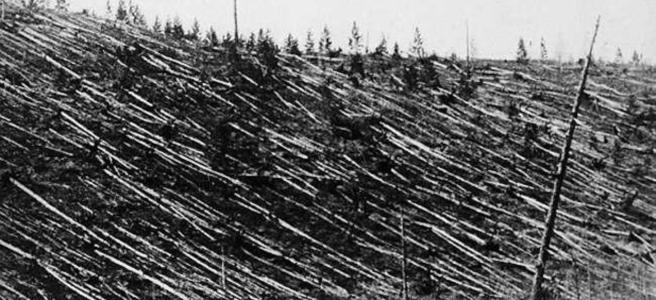
Into this dispute drops a new book, Andy Bruno’s Tunguska: A Siberian Mystery and Its Environmental Legacy. Ethan Pollock in his recent review of the book in the Times Literary Supplement makes clear its pertinence to the problem addressed here:
In Tunguska: A Siberian mystery and its environmental legacy, Andy Bruno explores what happened [after the event] with remarkable drive, energy and what he calls ‘strategic agnosticism’: a skilful weaving together of Russian and Soviet history, modern science and environmental studies that gives no approach the upper hand. Other scholars have written about Tunguska from various perspectives, but almost always in order to try to explain what happened that day in 1908. Bruno focuses instead on how specific genres of storytelling and scientific argumentation created and sustained popular and professional curiosity over the ensuing century. (my emphasis)
Here, we have an example of a study that manages unproblematically to bracket an undoubtedly real event (whose ontological status contrasts sharply with that much more dubitable one of UAP) from its textual wake, those stories and arguments “created and sustained [by] popular and professional curiosity over the ensuing century.”
Bruno’s work is especially relevant, as it addresses directly the half-humorous line of attack on bracketing launched by Kripal and Agrama, who compare bracketing the question of the being of the phenomenon from its meaning as is customary in the social sciences to adopting the same approach with regards to radiation. On the one hand, the analogy is questionable if not specious, given the marked difference in ontological status between radiation and UAP; on the other, however, Bruno’s study demonstrates both the ease and promise of shifting perspective from engaging in the attempt to resolve the controversies about the nature of even an undoubtedly real event and its cultural shock waves.
But the whole matter admits of a finer-grained analysis. In our classic study of the Raëlian Movement, Susan Palmer and I, like good religious studies scholars, bracket the question of whether Claude Vorilhon in fact experienced what he claims to have; rather we expose the ideological underpinnings of the Message to account for the success of Vorilhon’s New Religious Movement. In the strictly poetic work one can find here (the work toward the epic Orthoteny), the “reality” of the UFO is as irrelevant as that of the gods of Homer and Hesiod to their respective poems or that of the saints and angels in Dante’s Commedia to his. In the more cultural critical essays that make up most of the posts here at the Skunkworks, the problem is more complex. In some regards, the focus is precisely and exclusively on what I’ve termed here “cultural shockwaves” along the lines pursued by Bruno, UFO books, movies, and other media and the thinking that goes into and on around them. Here, I read (i.e., attend hemeneutically) to “the UFO mythology”, which, as a mythology, is grasped in the same way a reader approaches the Iliad and Odyssey, the Theogeny, or the Commedia. In these instances it might be argued that I adopt a tacit acceptance of some version of the Psychosocial Hypothesis, for, as I ponder in a more recent, more cautious post: “the significance of what [I call] ‘the UFO mythology’ will have a different significance, culturally (won’t it?) if the root ’cause’ is itself not merely ‘subjective’ (misperceptions or deceptions on the part of the witness, as per the Psychosocial Hypothesis) but ‘objective’ (whatever the nature of that objectivity might finally be).” In this latter regard, it seems to me, Bruno’s work legitimates, to a point (always relative to the particular questions motivating the research), bracketing the question of the reality (if not the nature) of the phenomenon from its meaning effects. So, regardless of whether there is a physically real, genuine mystery to UAP, the work here and in sociology departments can proceed for the time being in good conscience—at least until Disclosure (and even then!).
 Skunkworks