Theology Professor Stephen Bullivant essays a delightful thesis on the belief (or fascination) in “ancient aliens” as an inflection of atheism in his recent article for Big Think.
In doing so, he draws, however unwittingly, on a central premiss of my and Palmer’s article “Presumed Immanent” concerning UFO religions and the ideology they share with “advanced” society. Bullivant cannily observes that “While we might tend to think of aliens as being paranormal beings, they are not supernatural ones,” underlining the more-or-less unconscious naturalism or physicalism or materialism that underwrites much thinking in the disenchanted societies of the earth (not that such notions are far from controversial…).
This reconfiguration of religion-as-ufology has its modern inflections, too. The recent whistleblower revelations of David Grusch (which already have their own Wikipedia entry!) with their threadbare rumours of good and evil aliens, the crimes of the latter and the agreements entered into with them by various earth governments, rimes with the discourse around fundamentalist interpretations of the End Times that first emerged as such with no little gusto in the 1970s and fundamentalist Christian takes on UFOs and their occupants. Indeed, Nick Redfern described this mindset in certain governmental elements in his Final Events, a volume at home beside the more recent Skinwalkers at the Pentagon…
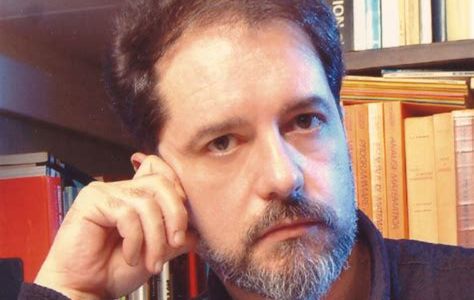
The matter is thought-provoking. On the one hand, the Flying Saucer has inspired a religious response. The Ancient Alien Hypothesis underwrites the dogma of the International Raëlian Movement; Theosophy and its Ascended Masters and doctrine of reincarnation find a ufological inflection in Unarius; and even the Nation of Islam has its mythology of the extraterrestrial origin of the white race and the nature of the UFOs. In all these cases, the UFO phenomenon is spiritualized. In a similar manner, a fundamentalist Christian perspective “abducts” (in the sense of Peirce’s semiotics) the UFO. On the other, a scientific, secular mindset is teased into dimensions more paranormal, the case of Jacques Vallée’s renunciation of the Extraterrestrial Hypothesis in the late 1960s being the locus classicus. Most recently, astrophysicist Massimo Teodorani has admitted (in part) “what emerges from my thoughts is that the UFO phenomenon is not much different …from ghost-like apparitions… So: why not from “other dimensions”, including the after-death realm?”. And it would be remiss not to mention, among the younger generation of researchers, Joshua Cutchin, who recently published a two-volume study on the phenomenon and death…
I hesitate to posit, as more rash thinkers have, that the phenomenon is a site where a binary opposition between the paranormal and the supernatural or between the secular and spiritual deconstructs (in the rigorous sense) but the theme surely possesses, as Walt Whitman said, “vista.”
 Skunkworks