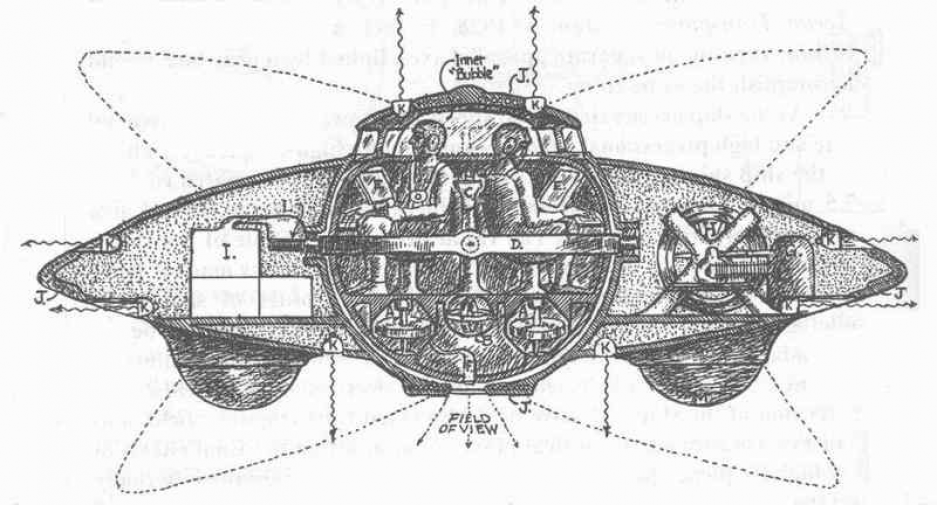

Commenting on my review of Gerald Heard’s The Riddle of the Saucers: Is Another World Watching? (1950), part of an on-going series “Jung’s Ufological Bookshelf”, Martin S. Kottmeyer generously provides extensive cultural context to Heard’s speculation that the flying saucers were piloted by super bees from Mars. Kottmeyer concludes: “Heard may seem prescient, but he was part of a tradition of science and science fiction speculations that was quite orthodox within the genre he was part of” (my emphasis). This sentence is curious: what genre does Heard’s book belong to?
The beginnings of a rigorous answer would evoke genre theory and reception theory; a prima facie materialist answer would trace the way Heard’s book was marketed and how librarians catalogued it over the nearly seven decades since it was published.
Kottmeyer seems to group Heard’s book, one of the first on flying saucers, with a “tradition of science and science fiction speculations,” which seems paradoxical. Science writing, even when it is popular or speculative, makes a claim to being true, while science fiction, as a kind of fiction, does not (or, more accurately, it makes a claim to an artistic truth…). However much A Brief History of Time and The Time Machine might have the same word in their titles and be science writing and science fiction, respectively, they surely belong to two different genres.
Today, and surely for some decades before, ufology is a liminal, paradoxical genre. On the one hand, it makes claims to being true, but in a way that is difficult to pin down. Some ufological volumes, e.g. Jacques Vallée’s Anatomy of a Phenomenon (1965) would make a claim to being true, in a provisional sense, in the same way any other sufficiently speculative science book might. Others, such as Desmond Leslie’s Flying Saucers Have Landed (1953) stake a different truth claim, one more akin to that of a religious work.
However much the truth claim of that paraliterature ufology is oscillates between the natural and spiritual, it can’t quite claim to belong to the same genre as, e.g., Carlo Rovelli’s Reality is Not What It Seems: The Journey to Quantum Gravity (2017) regardless of how speculative the later chapters of Rovelli’s book might be. As many have pointed out, ufology is a pseudoscience (perhaps a genre all its own), though, as Vallée has cogently remarked, no problem is scientific in itself, only the approach to the problem can be properly called scientific.
For these reasons, perhaps, the literature about the UFO that is not explicitly fictional has been read as a kind of folklore in the making or mythology, not that either term in its generality gets us much further. But this middle way has the advantage that it can make its truth claim and bracket it, too. However much folk wisdom might possess a merely heuristic truth, that truth is still practical and uncannily modern: however much depression might be ultimately a result of brain chemistry, the folk psychology that underwrites meditative practice prescribes an effective therapy, and stories of faeries are as age old as they are contemporary (just ask highway builders in Iceland). A mythology, likewise, following Levi-Strauss, can claim an effective truth, just of a different kind than that of the natural sciences: regardless of whether an axe is made of stone or steel, it’s still an axe. Myth, like folklore, in the case of the ufological literature, is possessed of a weird reality, as daemonic as those entities and situations it deals with.
For these reasons, I tend to take the pseudoscientific ufological paraliterature as belonging to a genre neither scientific nor science fictional, as its truth is neither one that is subject to experiment nor calculation nor one that invites us to only imagine the world as other than it is or was. Its truth, like the flying saucer, hovers between the two; like the UFO, it is both/neither material and/nor immaterial; nevertheless, like its namesake, it leaves traces, in the culture and its imaginary.
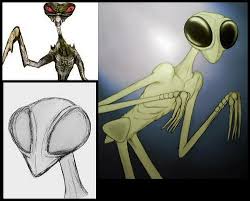 In the Alien Abduction literature, the ETs are often described as being insectoid in various ways, and the figure of the Mantis is prevalent. So, in the context of the development of the myth (if not the hard core of the mystery), Heard’s book is, intentionally or not, significant.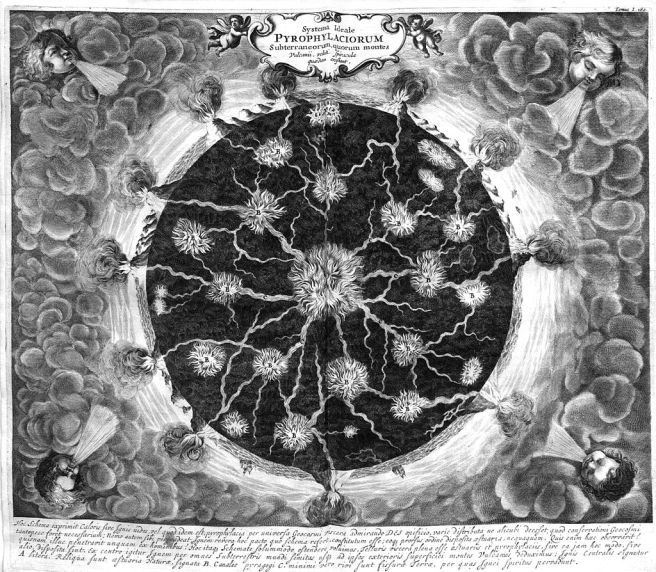
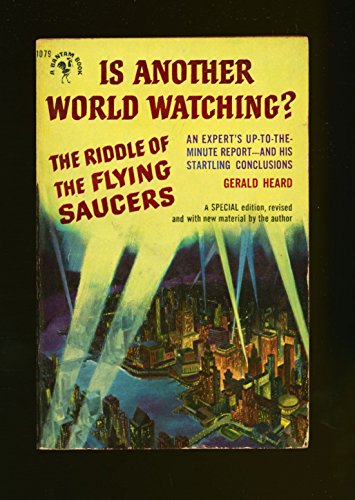 Gerald Heard. The Riddle of the Saucers: Is Another World Watching? London: Winter and Worsfold, 1950. 157pp.
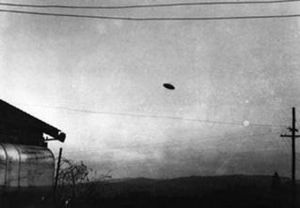 the discs’ pilots, like we would soon be, are space explorers. He then ranges over the possible origins of the discs and concludes with the hypothesis Jung notes, that the pilots are likely “super bees”—from Mars. Further evidence of Mars’ being the discs’ homebase is the peculiar size, appearance, and orbits of Mars’ moons, Demos and Phobos, whose oddness prompts Heard to propose they are artificial, orbital launch platforms. Heard then, in classic, ufological style, detours into a catalogue of premodern sightings, from the Eighteenth Century to Foo-fighters and Ghost Rockets, before speculating that the Martian bees’ purpose is likely to observe our industrial, technological, and military development, and to determine what threat the earth might pose to Mars, drawn in the first instance by their witnessing the detonation of atomic bombs. Heard concludes by summarizing the classic argument that, since the flying dics are neither hallucination nor terrestrial they must therefore be extraterrestrial.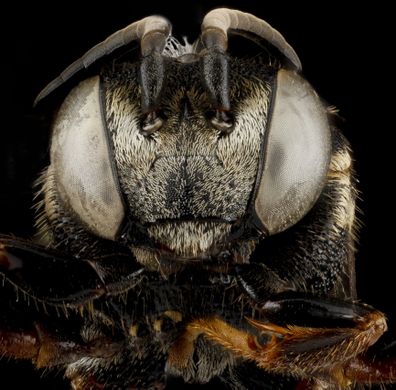
 Skunkworks